Garage, patio, pool deck, warehouse and showroom floors — installed by a licensed
Florida general contractor with 25 years in the trade. We diamond-grind the slab,
measure it for moisture, and build the system in layers. That is what separates a
floor that stays down from one that bubbles off.
Naples · Marco Island · Bonita Springs · Estero · Fort Myers · Cape Coral · Golden Gate · Lehigh Acres
A bare slab is a working surface, not a finished one. It gives off dust, it drinks in
oil, and it stains permanently the first time something is dropped on it. A properly
specified coating turns that slab into a sealed, finished floor you can actually live
with — and in a Florida garage that is doing real work.
Stops the concrete dusting
Bare concrete constantly sheds fine gray powder off the surface — it is what coats your storage boxes and gets tracked into the house. Sealing the slab stops it at source.
Doesn't absorb oil or chemicals
Concrete is porous — a dropped oil, brake fluid or fertiliser spill soaks in and is there for good. A coated floor is non-porous, so a spill sits on top and wipes off.
Resists hot-tire pickup
Tires come off a Florida road hot and soft. On a cheap coating they bond to it and lift it off in patches when you pull out. A correctly ground, properly cured system does not let go.
Slip-resistant when wet
Anti-slip aggregate goes into the topcoat as standard — on every floor we install, not as an upgrade. The flake profile adds its own texture on top of that. Pool decks, lanais and wash-down areas get a more aggressive grip than a garage does, but nothing leaves here slick.
American-made materials
We use American-made coating materials from American suppliers. It matters for consistency batch to batch, and it matters for what happens if a product ever needs supporting.
UV-stable — it won't yellow
Clear epoxy ambers in sunlight. Anywhere daylight reaches — an open garage door, a lanai, a pool deck — we run a UV-stable urethane or polyaspartic as the wear layer so the color stays where it started.
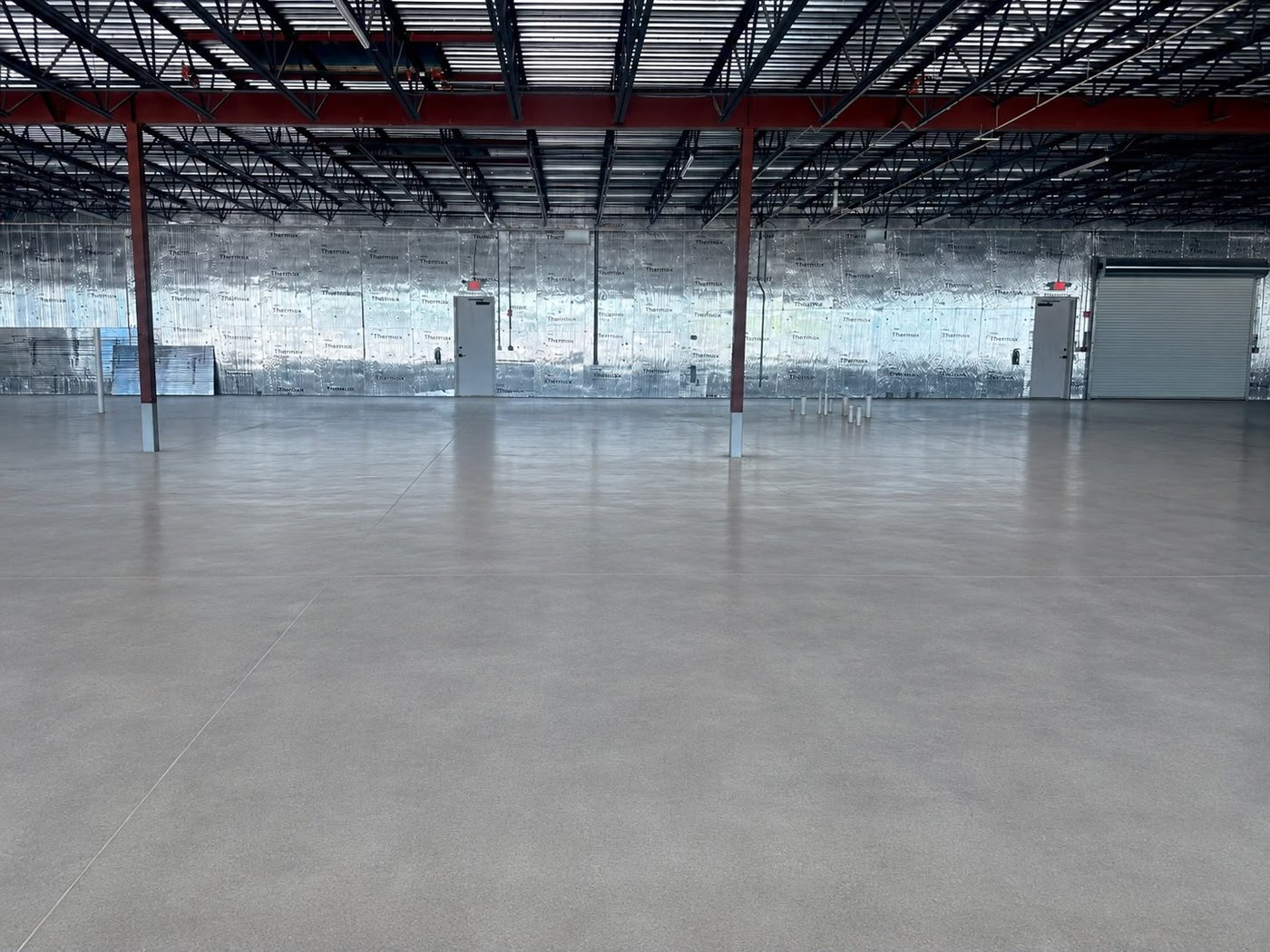
On a commercial floor the specification is doing a job, not decorating. What the floor
has to survive — forklift traffic, wash-down, chemical exposure, thermal shock, point
loads — decides the system. We work as a general contractor, so the floor is scheduled
against the rest of the build rather than dropped in at the end.
Seamless — nothing to trap grime
No joints, no grout lines, no tile edges. A monolithic surface is what makes a floor genuinely cleanable, and it is why coatings are specified in food and healthcare environments.
Chemical-resistant
Solvents, acids, caustics and cleaning agents will etch a bare or polished slab. A resinous system is specified against the actual chemistry the floor will see.
American-made materials, at full spec
Our coating materials come from an American supplier, and they go down at the thickness they were engineered for — not thinned out to stretch a bucket further across a big floor.
Rated for forklift and wheel traffic
Hard-wheel and forklift traffic is an abrasion and point-load problem. Film thickness and topcoat hardness get specified to the traffic, not to a price point.
Scheduled around your operation
Floors get phased in sections, run at night or over a weekend where the operation demands it. The sequence is agreed with you up front so you know what is out of service and when.
Flake blends, solid colors, custom metallic pours, polished concrete and quartz
broadcast. Pick a system, pick a colorway — then send it straight through with your
quote request.
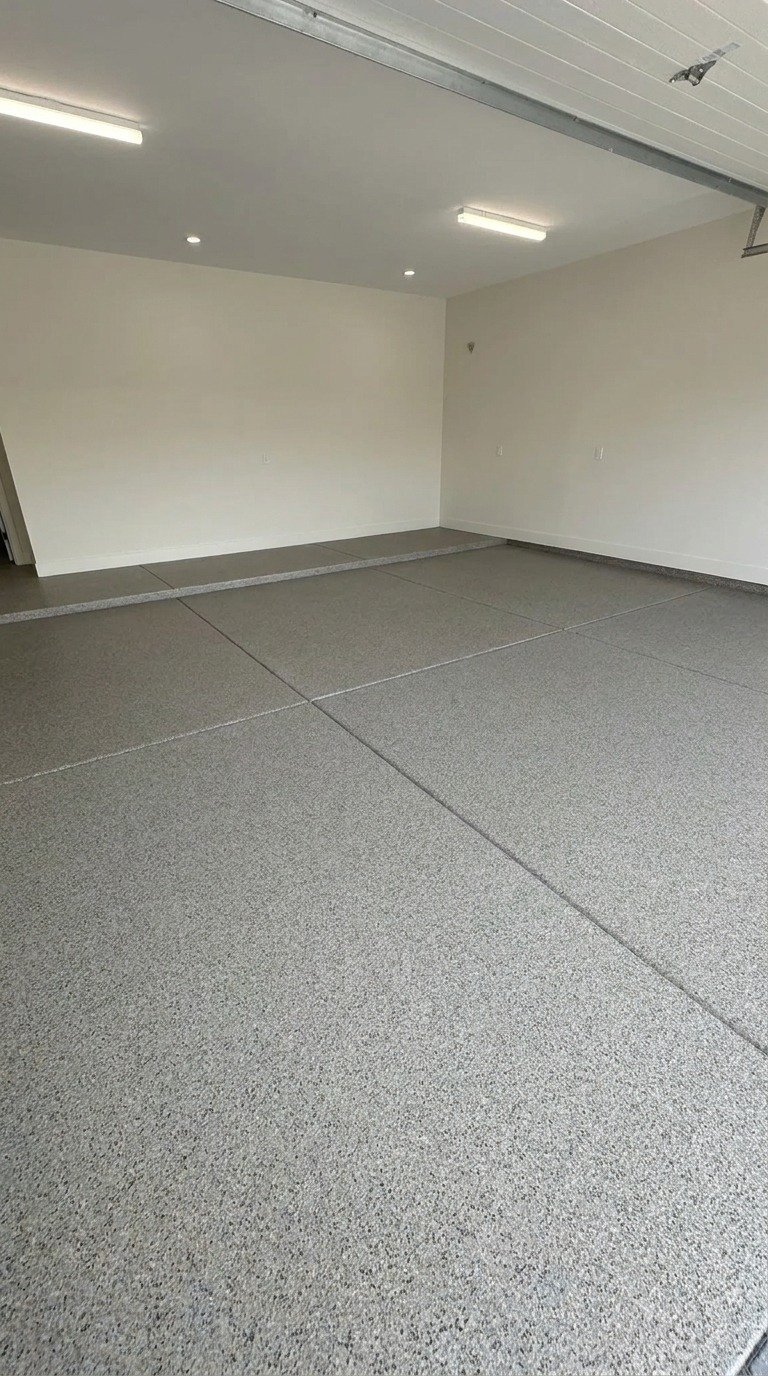
Flake Broadcast · Domino · Satin
Custom Blend, Solid Color and
Polished Concrete are our own floors, photographed on site and
digitally enhanced for resolution.
Nearly every failed coating in Florida failed underneath, not on top. The
preparation is the job — the color is just the last thing that happens.
01
Diamond Grind
We mechanically grind the slab to an open concrete surface profile, taking off the weak laitance layer at the top of the pour. We do not acid-etch. Etching does not open the concrete properly, and a coating that cannot key into the slab is a coating that will let go.
02
Measure The Moisture
We measure the slab for moisture and seal against it. In Florida, water vapor rising up through the slab is the number one cause of coatings bubbling and delaminating — the vapor has nowhere to go, so it pushes the coating off. Most crews skip this test entirely.
03
Cut & Fill The Cracks
Cracks are cut open to a clean edge, filled with a rigid repair material and ground back flush. They are not painted over. A crack that gets skimmed simply prints back through the finish and keeps moving underneath it.
04
Build It In Layers
Base coat, then a full flake or aggregate broadcast to refusal, then a hard topcoat — each layer fully cured before the next one goes down. We use American-made coating materials and install them at full specification: we do not thin the product and we do not cut it.
05
Finish The Edges
The floor is cut in properly at the walls, coved where the specification calls for it, and taken cleanly to the door line. Edges are where a floor either looks installed or looks poured in by someone in a hurry.
06
Cure, Then Hand Over
A resin system reaches full mechanical and chemical cure on its own schedule, and we let it. It takes as long as it takes. We walk the finished floor with you before we call it done.
Surface Restoration
Restoring The Surface, Not Just Coloring It
Concrete is not the only hard surface the Florida sun takes apart. The same principle
runs through everything we restore — protect the surface, or it keeps breaking down.
Asphalt Restoration
Why Hard Surfaces Fail Here
The Climate Is The Wear
A hard surface in Southwest Florida is under attack from the day it is poured. UV
breaks down the binders that hold it together, heat drives it, moisture works up
through it, and traffic wears the top layer away. What you are looking at when a
surface grays out, dries and starts shedding is not dirt — it is the protective
layer gone. Restoration puts that layer back. A cosmetic fix just hides that it left.
UV bleaches asphalt out
Asphalt is held together by a black petroleum binder. Florida sun burns that binder off, and as it goes the surface fades from black to gray, dries out and starts to ravel — losing loose stone off the top. The gray is the binder leaving, not a stain.
Restoration rebuilds the wear layer
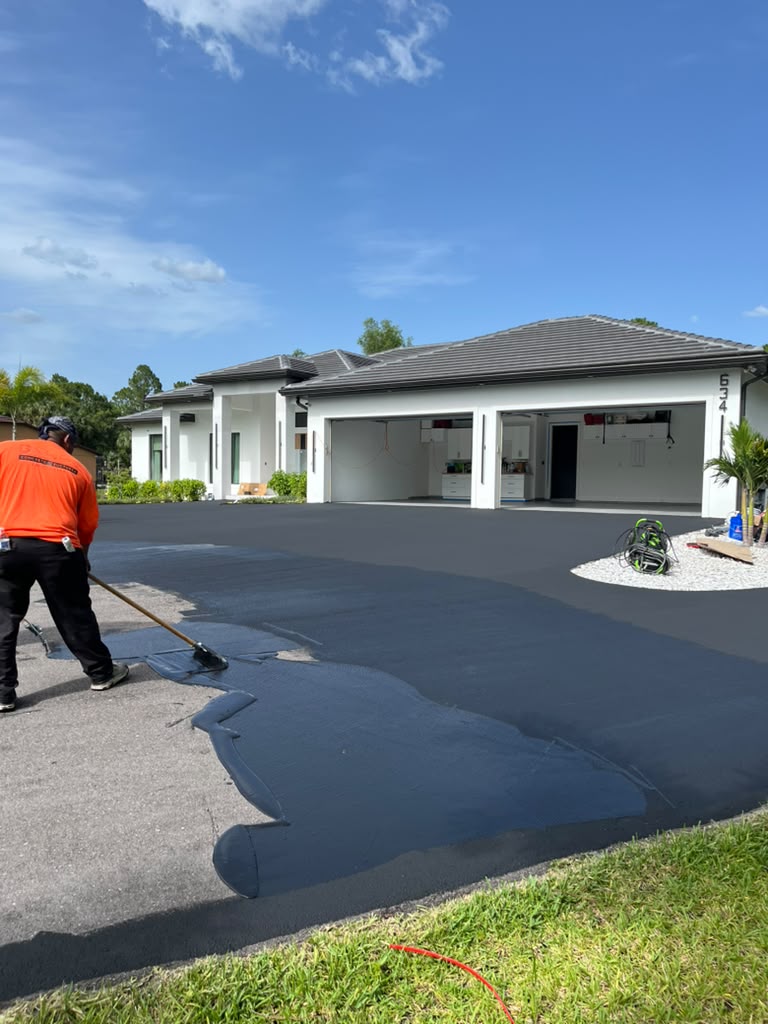
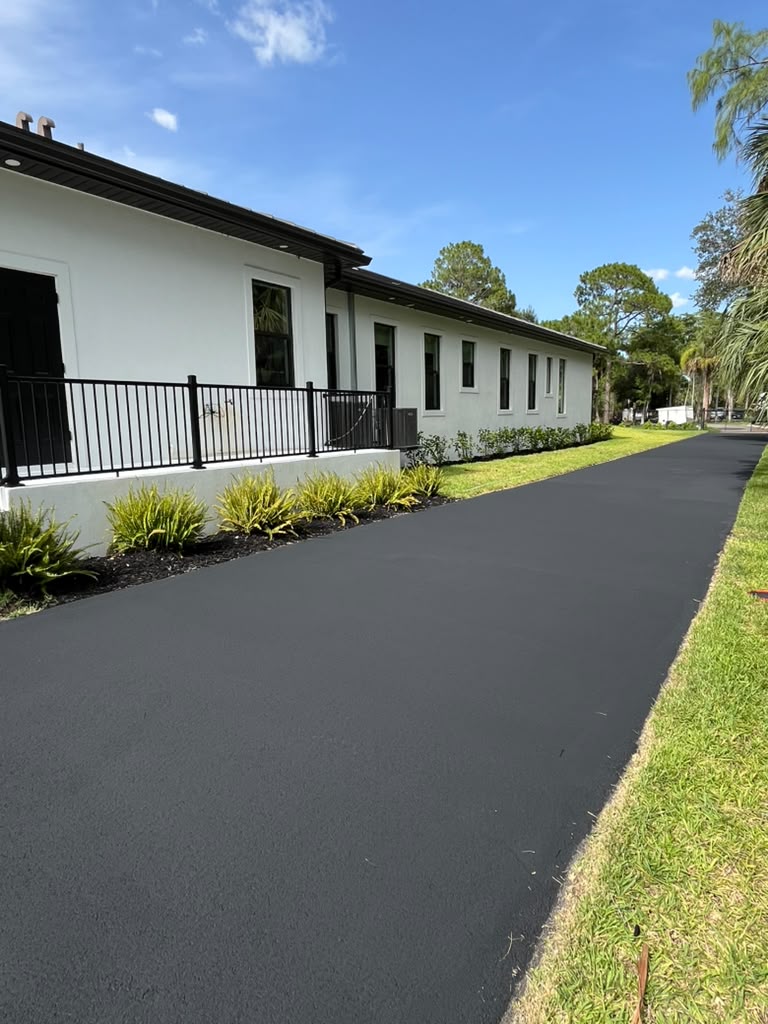
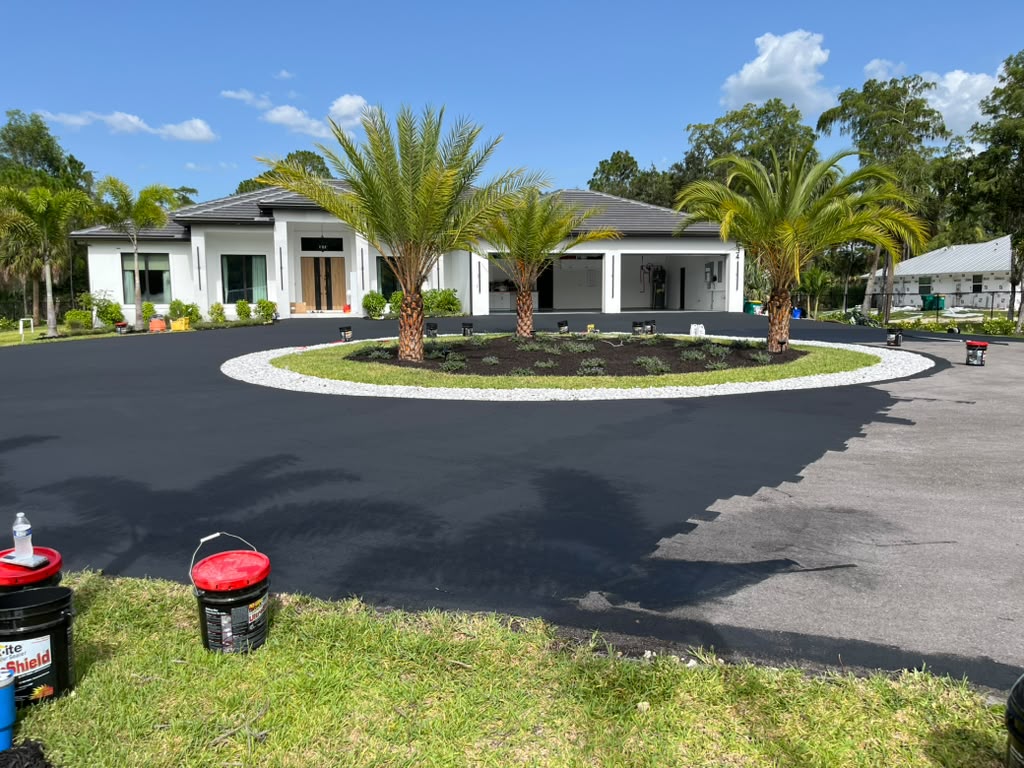
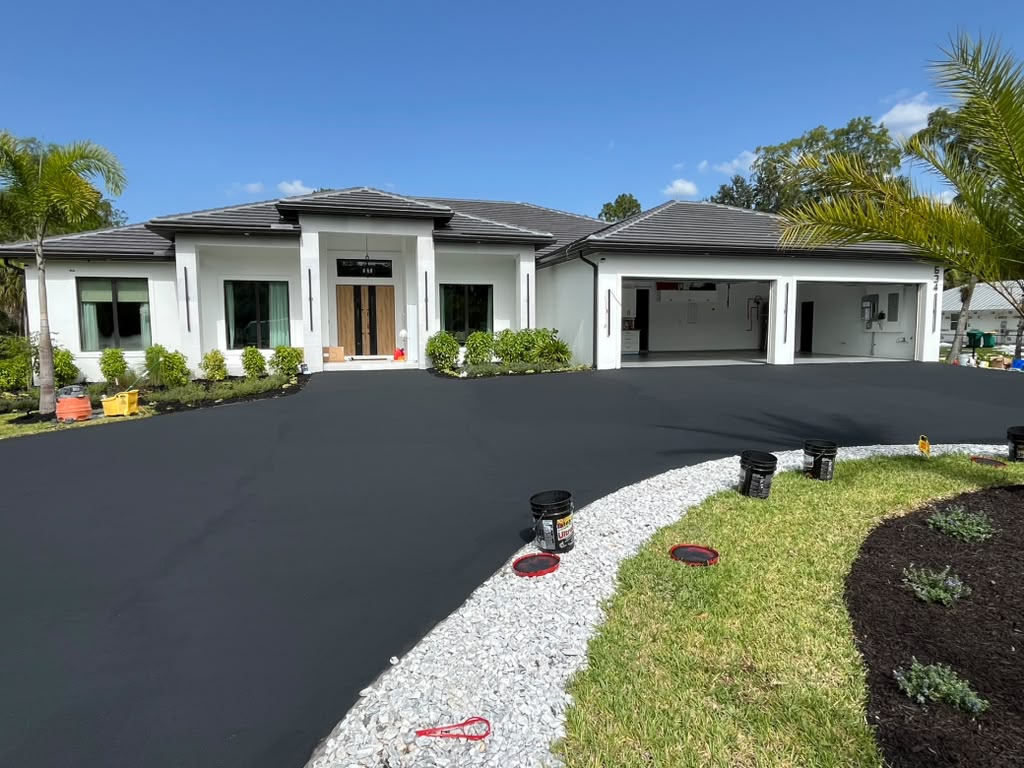
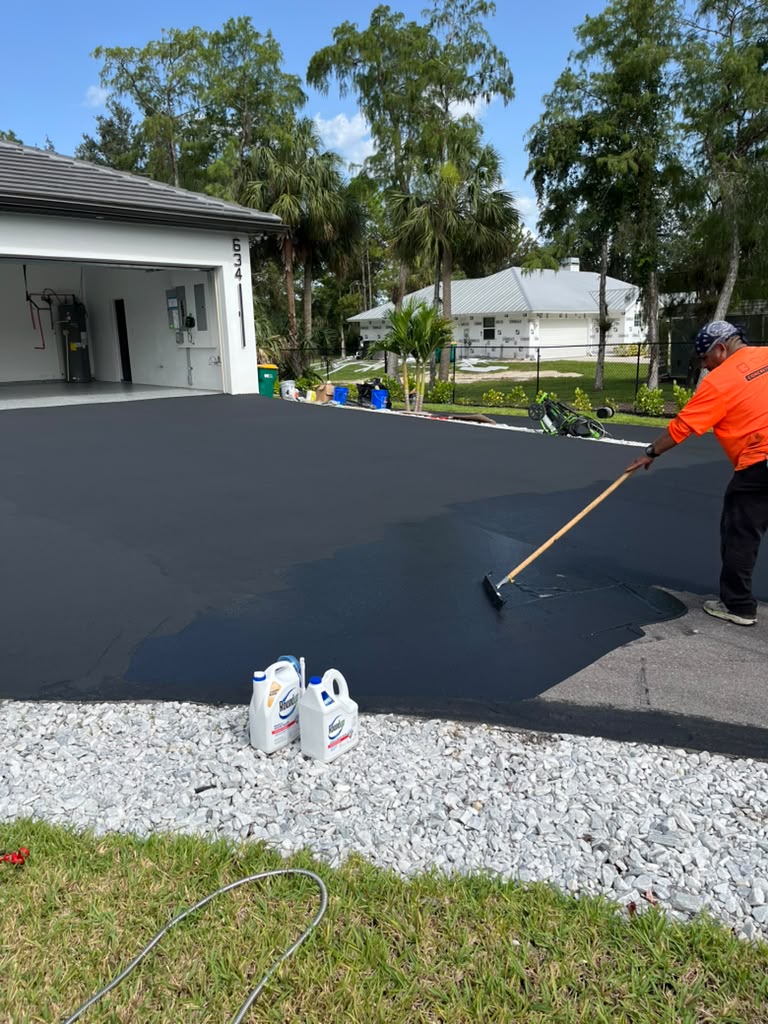
Resurfacing a driveway or parking area lays a fresh, bound wear layer back over the top of the existing pavement. It restores a rich, uniform, dark finish and re-establishes the protective surface — rather than tearing out and replacing pavement that is still structurally sound underneath.
Sealed against water and fuel
A worn, open surface drinks in water and lets fuel and oil eat into it. Restoring the surface closes it back up, so water sheds off the top instead of working down into the base and pulling the pavement apart from below.
Extends what you already have
Renewing the surface on a schedule protects the layers beneath it and puts off the day the whole surface has to come out. It is the difference between maintaining pavement and eventually replacing it.
01
Clean The Surface Down
The surface is cleared of dirt, loose stone and growth, and any oil spots are treated so they cannot bleed back through. A wear layer laid over a dirty or greasy surface has nothing to grip — the same reason we never coat concrete we have not prepared. The prep is the job here too.
02
Repair Before Resurfacing
Cracks and low spots get addressed before anything goes over the top. A crack left open keeps moving and telegraphs straight back through a fresh surface — exactly like a crack skimmed over in a slab. It gets dealt with first, not covered.
03
Lay A Bound Wear Layer
A fresh, bound surface layer is applied over the sound pavement and worked to an even film — not flooded on thin to make a bucket stretch. That is what restores the dark, uniform finish and re-establishes real surface protection, rather than tinting the gray.
04
Cure, Then Hand Over
A restored surface needs to cure before it takes traffic, and we let it. It takes as long as it takes. We walk the finished driveway or lot with you before we call it done — the same handover as every floor we install.
Every slab is different. We come out, look at the concrete, check it for moisture, and
price the system it actually needs — itemized, in writing, at no charge and with no
obligation.